What is our role - as learners and people - to lift up the work of queer and trans people of color in the context of larger movements for social resistance?
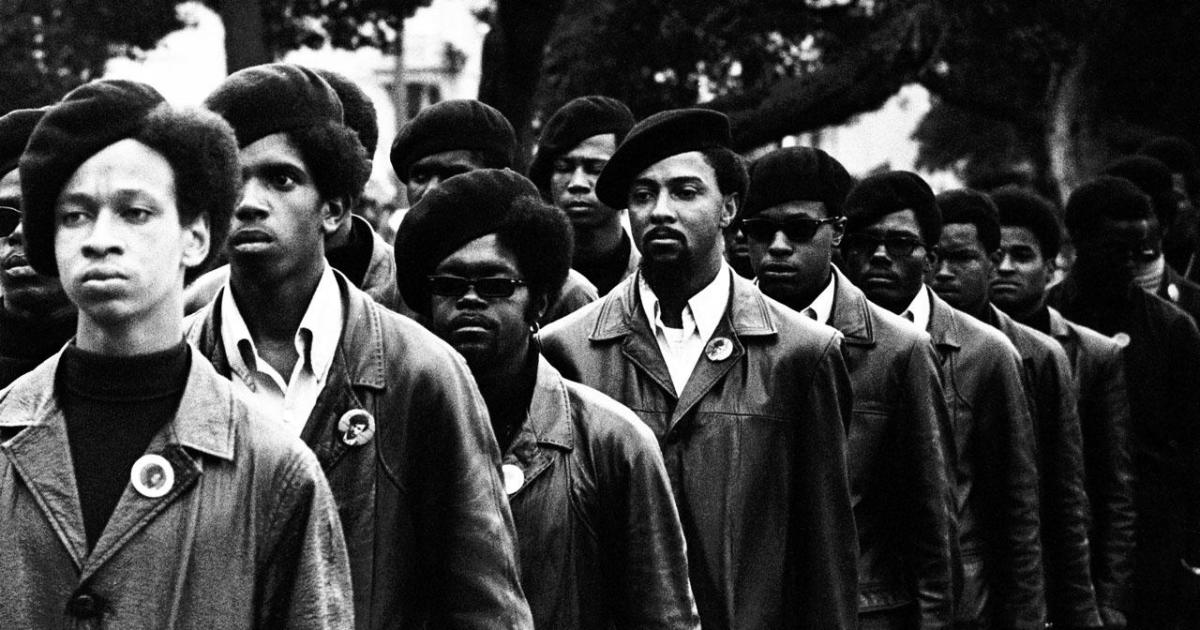
Last Thursday, I projected a photo of the Black Panthers as the backdrop to our weekly free writing exercise. Students are not required to use the image to inform their writing, but if they’re stuck, it can be a good place to start. Not a single student drew inspiration from the image; but perhaps even more alarming, not a single student could identify the organized and uniformed young black men.
I posed the question, “Why do you think we know about Dr. Martin Luther King, Jr. is but we’ve never heard about the Black Panthers?” A few shrugs, mostly stares, and one retort: “Because no one’s ever taught us.” “Seriously, why? Why do you think you know about Dr. Martin Luther King, Jr., but hardly any other civil rights leaders?”
I might as well have been sitting in my own classroom, staring at a photo of a black man I couldn’t name when I read “Bayard Rustin: the gay black pacifist at the heart of the March on Washington”. A twinge of shame rustled through me: I’ve never heard of this guy - and he lead the original march on Washington. How is it possible to earn a high school diploma, let alone a four year degree, and have absolutely no idea about the contributions Bayard Rustin made to the civil rights movement?

Now I’m asking my former educators, “why?” Why are the well known leaders of the civil rights movement limited to the most “palatable”?
Rustin’s most well known contribution to the civil rights movement was that of “chief strategist” for King’s March on Washington in 1963. Where is the household recognition for his name? Rustin was openly gay, “an attribute which was regarded as a liability in the early sixties” (Young, 2013). The liability of this revelation is ignorance. When we, that is, the dominant white narrative, continue to paint one-off portraits of leaders as anomalies to “their people,” we are the embodiment of ignorance. Was Rustin withheld from my education because he was gay or because he was black, or both? Were the Black Panthers omitted from my students’ education because they are often portrayed as harbingers of violence? Who else is missing from the collective knowledge of our shared history?
The first step in defining "our role" to lift up the work of queer and trans people of color in the context of larger movements for social resistance is to fill in these gaps. As educators, it is our role to leave as few gaps as possible, once we uncover what and where they are.
Thanks for this post ellen. I appreciate the way you move between your teacher self and student self (former and present) with a frank kind of empathy. "Ya don't know what ya don't know" takes on a maddening ring when it comes to all the (deliberate) gaps in our education and particularly the telling of history. How did your students react when you told them more about the Black Panthers or unpacked the question of why they had never been taught about that social movement?
ReplyDelete